
Often children dream of growing up to be star athletes competing in the NBA, the NFL, or to become star tennis or track and field athletes, depending on their talents and inclinations. As parents we know this by the fact that our kids look up to athletes like Cristiano Ronaldo, LeBron James, and Serena Williams with awe and admiration, hoping to be able to achieve their superhuman feats when they grow up.
Children’s Dreams to be “Superhuman”
As children grow older, however, they start to understand and appreciate that there’s “something more” to sports and athletics; something beyond being a “sports superhero”, something more than meets the eye. We remember this from the time we were entering our teens; the vision of reaching adulthood and aspiring for greatness. As parents, we see this occurring during the transition our children go through from primary schoolers into teenagers.
The Transition for Pre-teens to Teens
Part of that change includes them starting to grasp and develop abstract concepts more fully than they did in their pre-teen years. For instance, where friendship meant having a few good buddies to play games with, it later develops into the ability to establish and manage friendships with an extended variety of other children for school, sports, and other purposes.
Similarly, whereas a young child might try to get a good score on a pop-quiz to get a treat from its parents, a teenager starts to grasp the concept of self-betterment and excellence. Also, whereas a young child understands that it’s not good to fight with other children, an older child starts to understand the concept of respect for other people.
This is why children in their early and late teens feel such a strong connection with Olympic ideals. Once every four years, Ancient Greeks set their quarrels and disputes aside in the name of the three pillars of Olympism: Excellence, Friendship, and Respect; they competed in various games through good sportsmanship and fair play.
Olympic Sports and Learning a Second Language
Learning a second language shares many of the same principles of an Olympic sport; it’s an impressive skill to acquire requiring much discipline and dedication. It leads to the understanding of other cultures (or the culture of our forefathers), leading to respect for and friendship with people from all around the world.
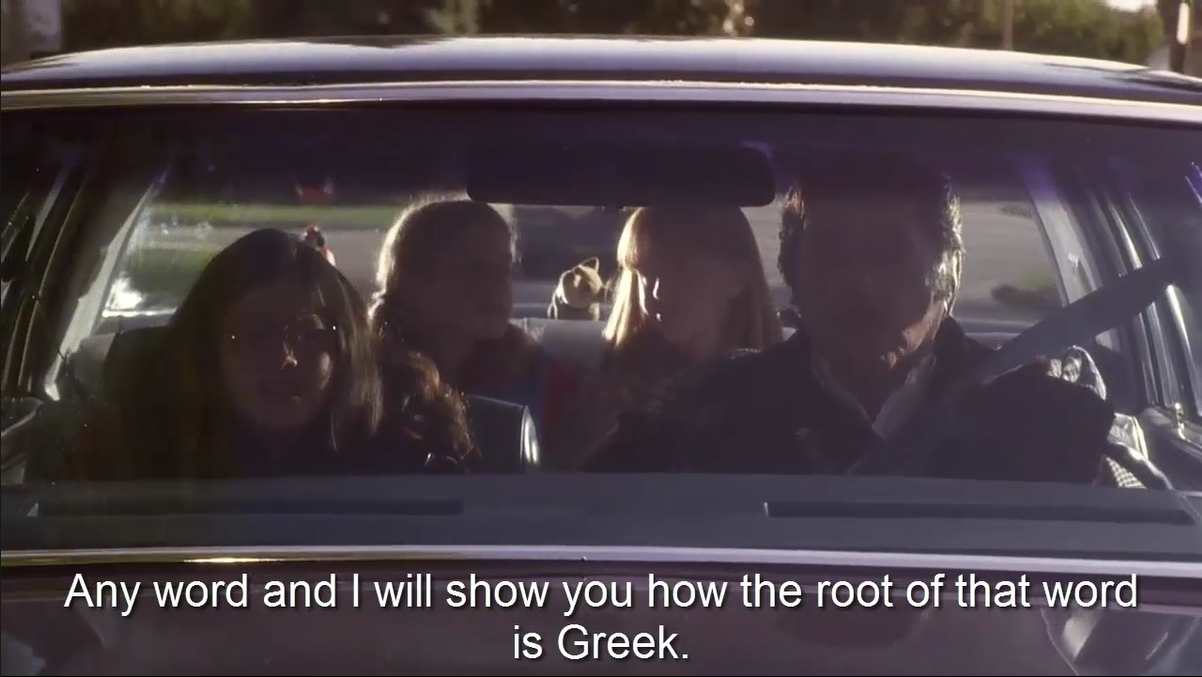
When a child learning Greek learns that the Greek word for “Theater”, (“Θέατρο”) is “Teatro” in Spanish or “Théâtre” in French, they will recognize not only how Greek culture and language have influenced the world, but also how different nations and people are interconnected and share the same appreciation and admiration for human excellence in all its forms and manifestations.
As parents, all this might be crystal clear to us, but motivating a 9-year boy who’d rather play racing games on his iPad, or a 15-year old girl who’d rather go to the mall with her friends, is another story entirely. That’s where Ellinopoula comes in; we bring the fun factor back into learning Greek as a second language so that Greek school on the weekend becomes increasingly interesting.
The Ultimate Goal
Ultimately, learning a second language is not only a skill for communicating; it’s a journey of self-discovery, a path to better understanding where we came from and dreaming of where and what we might reach in life. To this extent, at Ellinopoula we understand that acquiring a second language is not only a matter of skill; we gain inspiration from Olympic Ideals and strive for content which highlights and demonstrates the ideals of friendship, excellence, and respect for others and the planet we live on. We aim to be part of children’s journey in discovering their Greek heritage and their own personal journey to excellence.
Discover more about Ellinopoula.