
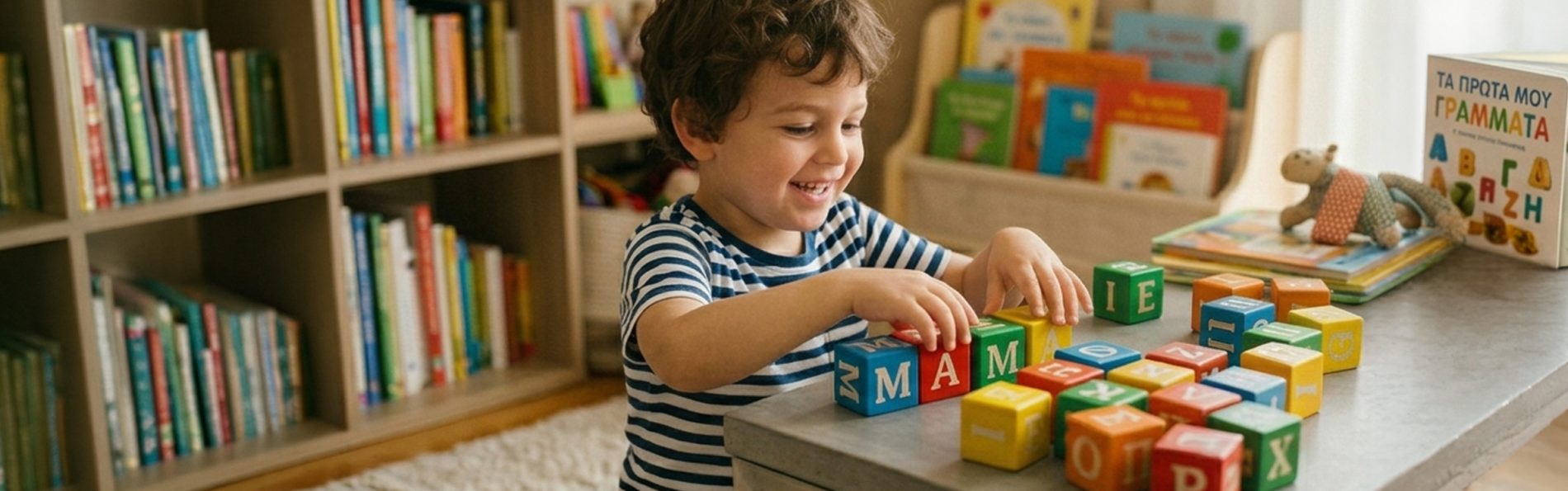
Before a single word can be read, before any story can be explored, there it is — 24 letters waiting to be discovered before kids learn Greek. And for most children growing up outside of Greece, those 24 letters can feel like a bit of a mystery.
That’s completely normal — and it’s actually the beginning of something exciting.
The “Different Alphabet” Challenge

For the majority of children learning Greek today, the Latin alphabet is their home base. They already know A, B, C. They can write their name, read a picture book, and spell their favorite foods. So when they first encounter the Greek alphabet, the natural reaction is to compare the two — and to notice the differences.
Some letters look familiar but behave differently. Others look completely new. And for younger children especially, this can feel a little overwhelming at first. If a child comes to their first Greek lesson and sees letters they don’t recognize, it’s easy for discouragement to creep in.
But here’s the good news: the differences between the Greek and Latin alphabets are not a problem. They’re a puzzle — and kids love puzzles.
Turn the Differences Into a Game
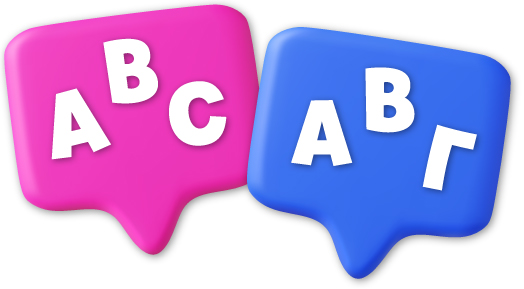
The key to helping children become comfortable with the Greek alphabet is gradual, playful familiarity. Rather than drilling the letters in isolation, the goal is to help kids build a relationship with the alphabet — letter by letter, in a way that feels more like exploration than memorization.
One of the best places to start? A side-by-side comparison of the two alphabets.
💡 Parent Tip: Print out both the Greek and Latin alphabets and place them next to each other on the table. Let your child look at them together and simply observe. You don’t need to quiz them right away — just let the visual connection happen naturally.
With both alphabets visible, you can start asking fun, curious questions together:
- “Can you find a letter that looks the same in both alphabets?” (Spoiler: quite a few do — A, B, E, Z, I, K, M, N, O, T, and Y have Greek counterparts that look similar or identical!)
- “Can you find a letter in the Greek alphabet that doesn’t exist in English at all?” (Hello, Θ Theta, Ξ Xi, Φ Phi, Ψ Psi, and Ω Omega!)
- “This letter looks like a ‘P’ — but in Greek it makes an ‘R’ sound. Can you guess which letter it is?” (That would be Ρ, Rho!)
These little discovery games transform the alphabet from something foreign into something fascinating. Each new letter becomes a clue to solve rather than a fact to memorize.
The “Word for Each Letter” Game
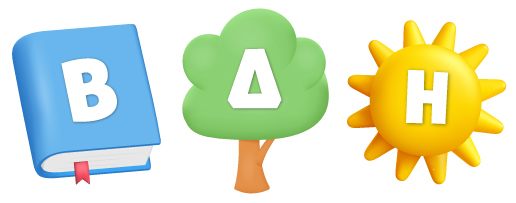
Once your child has had a chance to look at the Greek alphabet and start making sense of it, you can take the game a step further: challenge them to think of a Greek word that starts with each letter!
This works beautifully even for beginners, because kids often already know more Greek words than they realize — from family conversations, food names, songs, or simply their heritage. Start with the most familiar letters and build from there. Here are a few ideas to get you started:
| Greek Letter | Letter Name | Example Greek Word | What It Means |
|---|---|---|---|
| Α | Alpha | Αγάπη (agapi) | Love |
| Β | Beta | Βιβλίο (vivlio) | Book |
| Γ | Gamma | Γάτα (gata) | Cat |
| Δ | Delta | Δέντρο (dentro) | Tree |
| Ε | Epsilon | Ελέφαντας (elefantas) | Elephant |
| Ζ | Zeta | Ζώο (zoo) | Animal |
| Η | Eta | Ήλιος (ilios) | Sun |
| Θ | Theta | Θάλασσα (thalassa) | Sea |
You can turn this into a card game, a drawing activity, or even a road-trip quiz. The point isn’t to be perfect — it’s to stay curious and keep exploring.
A Few More Fun Ideas for Learning the Greek Alphabet at Home

Here are some simple, low-pressure activities that make learning the Greek alphabet feel like play:
- Alphabet scavenger hunt: Hide letter cards around the house. Call out the Greek letter name and let kids race to find it!
- Draw the letters: Have children trace or draw Greek letters alongside their English equivalents. This tactile practice helps the shapes stick in memory.
- Letter of the Day: Each morning, focus on one Greek letter. Look for it in Greek books, say a word that starts with it, and draw a picture of something that begins with that letter.
- Spot the Greek: Greek letters appear everywhere — in math (π, Σ, Δ), science (α, β, γ), and even in everyday logos. Turn it into a treasure hunt!
The more naturally the Greek alphabet weaves into daily life, the less “foreign” it feels — and the more it starts to feel like a second home.
How Ellinopoula Helps Kids Learn the Greek Alphabet

At Ellinopoula, we’ve designed a full ecosystem of activities to help children learn the Greek alphabet — we even have a whole themed collection dedicated to it — in ways that are joyful, interactive, and effective. Here’s what you’ll find on the platform:
Start your free 7-day trial with Ellinopoula!
Downloadable Worksheets

Beautiful, printable worksheets dedicated to the Greek alphabet give kids a hands-on way to practice letter recognition and handwriting. Perfect for pairing with the side-by-side comparison activity mentioned above — print one out and let your child get started right at the kitchen table.
Letter-Themed Online Quizzes
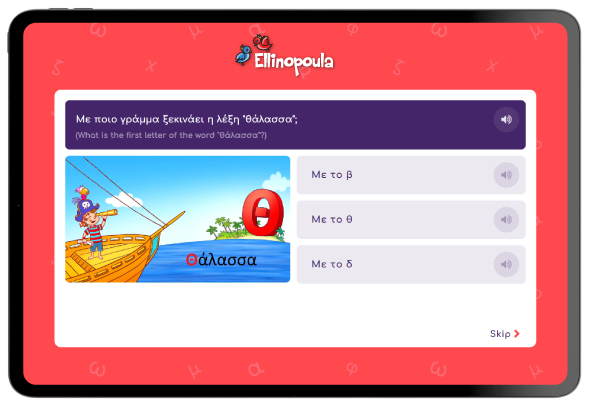
Each letter of the Greek alphabet gets its own story-based quiz on Ellinopoula. Every quiz has a distinct theme and a little narrative running through it, and kids are challenged to identify words that start with the featured letter. This storytelling approach means children aren’t just memorizing — they’re building vocabulary and context at the same time.
Online Coloring Activities
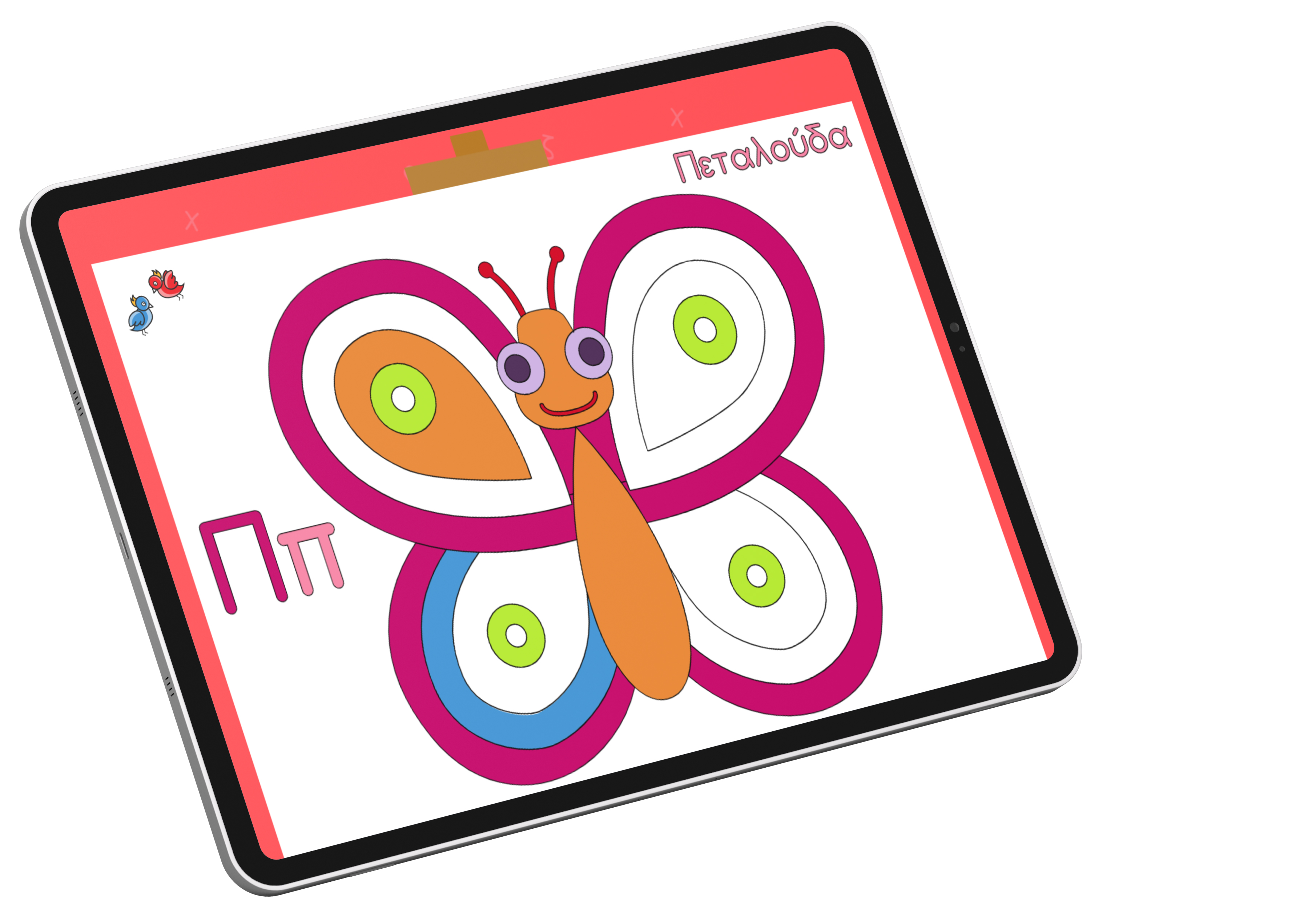
For each letter of the Greek alphabet, there’s a themed coloring activity featuring an illustration connected to a word that starts with that letter — for example, Ε for Ελέφαντας (Elephant). Kids color in the drawing while connecting the image to the letter, creating a memorable visual anchor for each one. It’s learning disguised as art!
Keyboard Monster
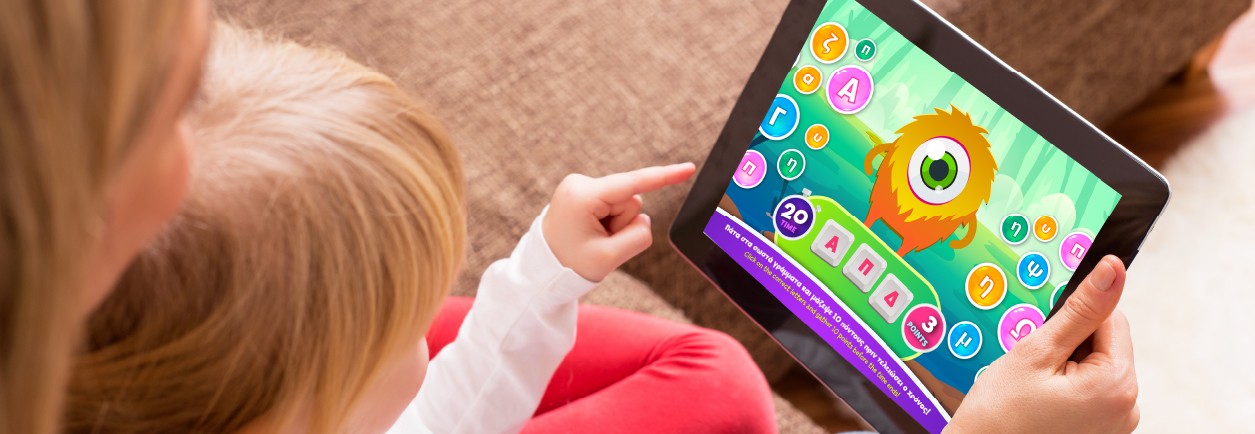
Imagine your child at the screen, fingers poised, as a mischievous monster inches closer — threatening to eat the keyboard if they don’t type the correct Greek letter in time! Keyboard Monster is one of Ellinopoula’s most exciting games, designed specifically to build fast, confident letter recognition. Kids hear the letter name and must click the correct key before the monster strikes. Each correct answer pushes the monster back; each mistake lets it creep a little closer. The result? An adrenaline-fueled way to learn the Greek alphabet that keeps kids coming back for more.
Alphabet Bubbles
In Alphabet Bubbles, children become deep-sea divers on a mission — their task is to pop the bubble that matches the Greek letter they hear. Hit the right one and they score five points (plus an encouraging “well done!”). Miss and they lose three. The underwater world makes every session feel like an adventure, and the audio-visual loop between hearing a letter and finding it on screen is incredibly effective for building letter recognition in young learners.
The Greek Alphabet Is the Beginning of Everything

Every Greek story, every myth, every song, every recipe written in Greek — it all starts with those 24 letters. And when children first learn Greek, getting to know the Greek alphabet isn’t just a technical exercise. It’s the moment they unlock a whole new world.
By approaching it with curiosity, a little creativity, and the right tools, that moment can be exciting rather than daunting. Whether you’re playing a quiz game at the dinner table, coloring an elephant together, or watching your child race against the Keyboard Monster, every step with the Greek alphabet is a step closer to the language — and to their heritage.
Ready to make learning the Greek alphabet an adventure? Explore Ellinopoula’s alphabet activities and start your free 7-day trial today!